Guide · 6 steps · Idea
Scope it like you will finish it
Updated
Games are rarely abandoned for want of ideas. They are abandoned under them. The start is easy, every good suggestion lands on the same list, and a few months in the list no longer fits in anyone's head. Scoping is how the list stays a list and the game stays a game.
Find the one loop
A loop is what the player does again and again: the part that has to be fun before anything else is worth making. Write it as one sentence a teammate could argue with. In Frostlight, a survival RPG about one long winter, it is:
Leave the campfire, cross the storm, get back before the cold does.
Then ask one question of every idea: does the loop need it to be playable? The storm, the dodge and the warmth that pulls you home do. The sled, crafting, a second enemy and cloud saves do not, however good they are. They are not cut. They are parked.
How to scope a game, step by step
Put only the loop on the board
Make a card in To Do for each piece the loop cannot work without, and nothing else. If one card hides a week of work, split it before anyone starts.
Started from your GDD with the assistant (From GDD to first playable)? It has made a first pass already. The cutting is still yours.

Give each discipline a category
Design, Systems, Mechanics, Audio: whatever your team really splits along. The designer finds the design and the programmer finds the systems, without wading through everyone else's ideas.
A card keeps its category when it moves onto the board, so the split still shows once the work starts.

Park everything else in Tasks for later
Every idea that is not the loop becomes a card in Tasks for later, in its category. Drag it back onto the board when its turn comes.
On Free a workspace holds 250 active tasks, and a parked card still counts. If parked ideas alone come near that, the scope is telling you something.

Fill the cycle with what you would bet on
A cycle is the unit of scope: a name, a count of days, and what the team brings onto the board. Bring into To Do only what you would bet on finishing, and leave the rest where it is. The board counts the cycle's days up, not down, and you complete it when you are ready.

Say no with a card
Halfway through a cycle, someone suggests ice fishing. Give it a card in Tasks for later under Mechanics, with a line on why it waits: not the loop yet, needs the lake. Then answer in the board's conversation with an @mention and a #link to the card, so the decision is written down where the team will find it.

Close the cycle, then choose again
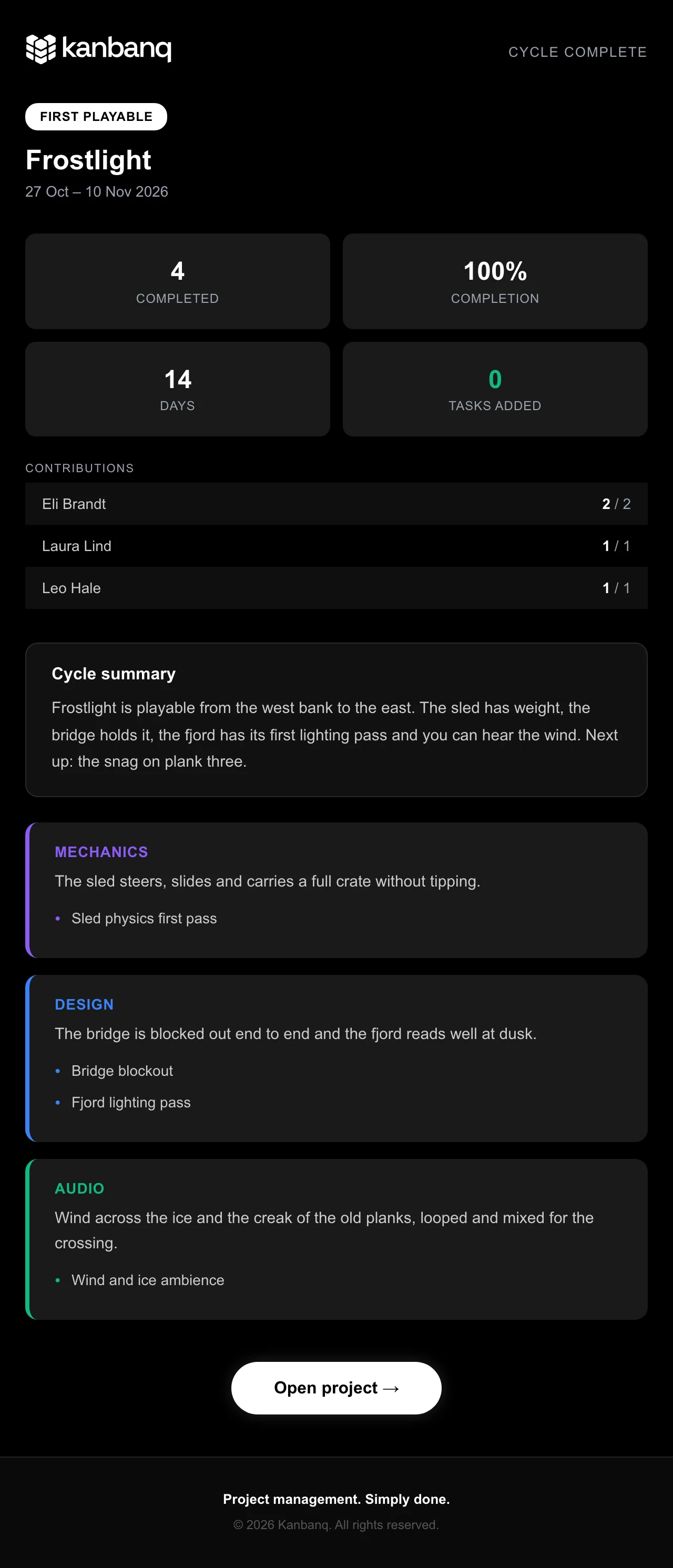
Complete the cycle. Done is archived, everyone on the board gets an email of what shipped, and the finished cycle stays in the history. Then open Tasks for later with the loop in front of you and pick the next cards. An idea that has waited three cycles without anyone missing it can go.
Kanbanq has no estimates or due dates today, so a cycle is sized by judgement and by what the last few cycles really closed. Due dates are coming soon. Kanbanq holds the scope; choosing the loop stays with the team.