News · Kanbanq 0.4
Kanbanq 0.4: built for game dev
Updated
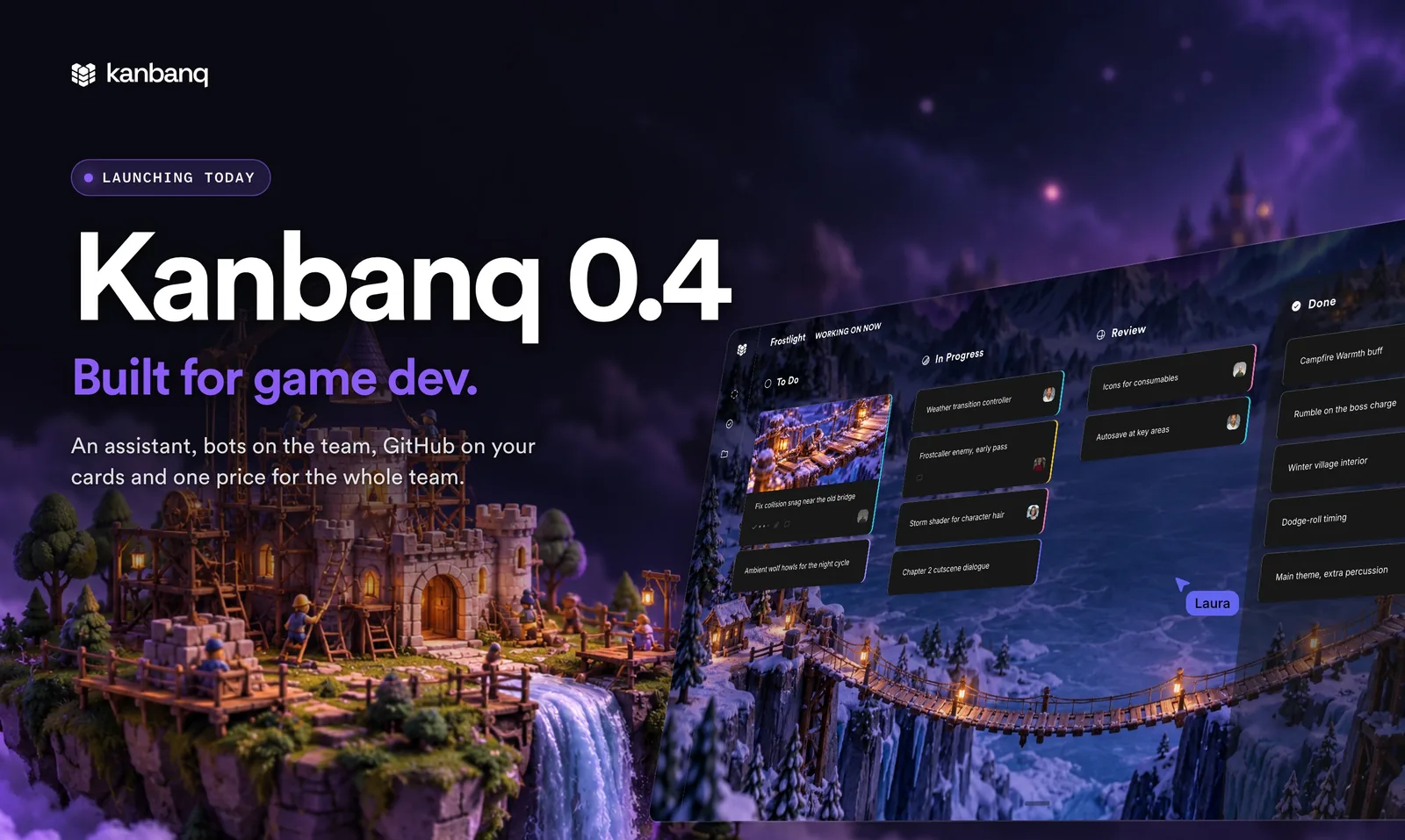
Kanbanq is a real-time board for a team making a game. 0.4 keeps the board as simple as it was and adds what game teams asked for most: a faster start, agents that work beside you, and a home for every game you make.
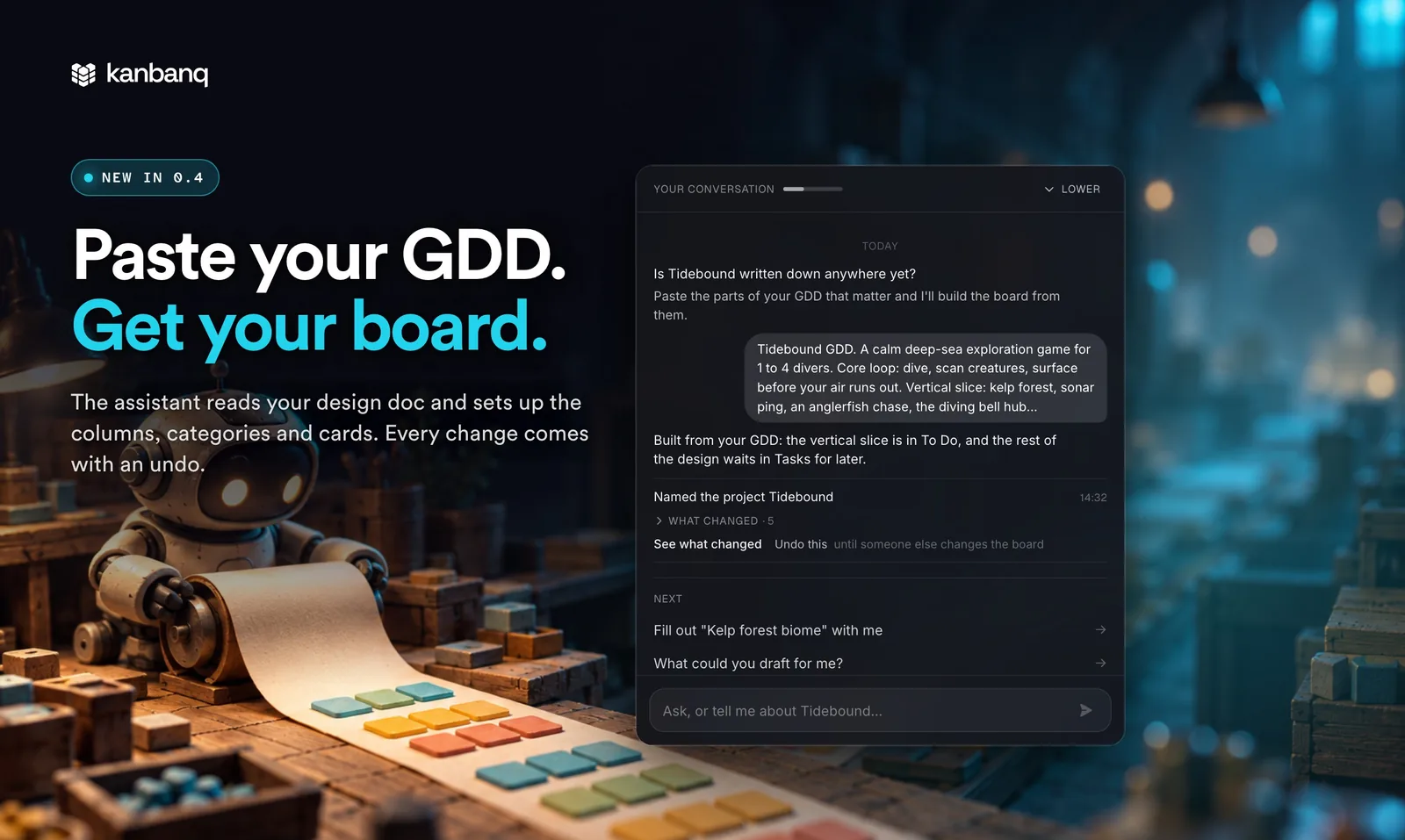
Paste your GDD. Get your board.
Paste your design document, or say what you are making in a sentence. The assistant asks a few questions, then drafts the board: columns, categories and cards, with what to start on in To Do and the rest in Tasks for later. You can see what it changed, and undo it while it is the latest change.
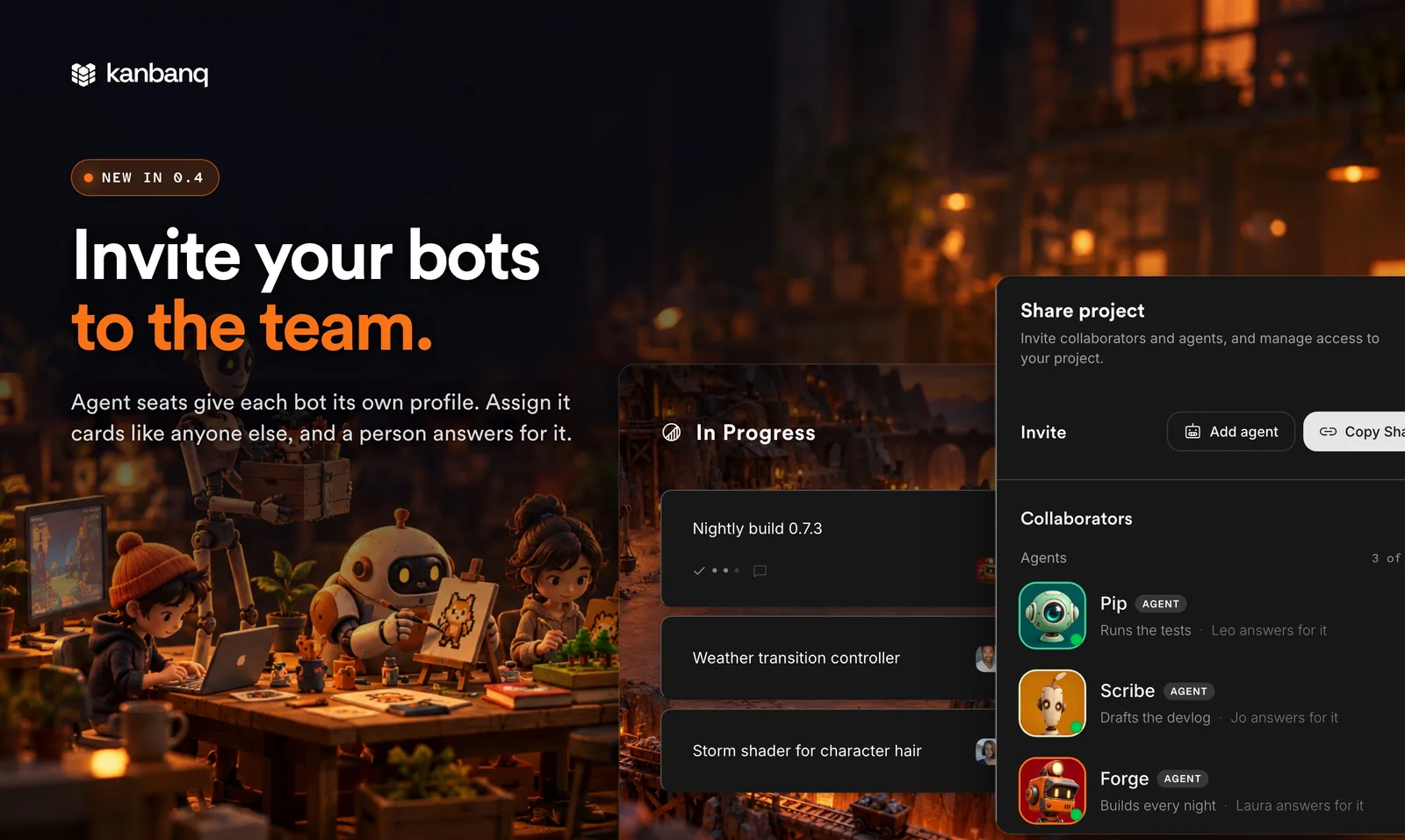
Invite your bots to the team
An agent joins the team like a person does, with its own profile and an Agent badge on everything it does. Give it cards like anyone else. It runs on your own tools; Kanbanq is where it picks up the work, and the board keeps what it was asked and what it reported. The person who added it answers for it.
Every paid plan can add as many agents as it likes. A workspace's own rules say what agents may do.
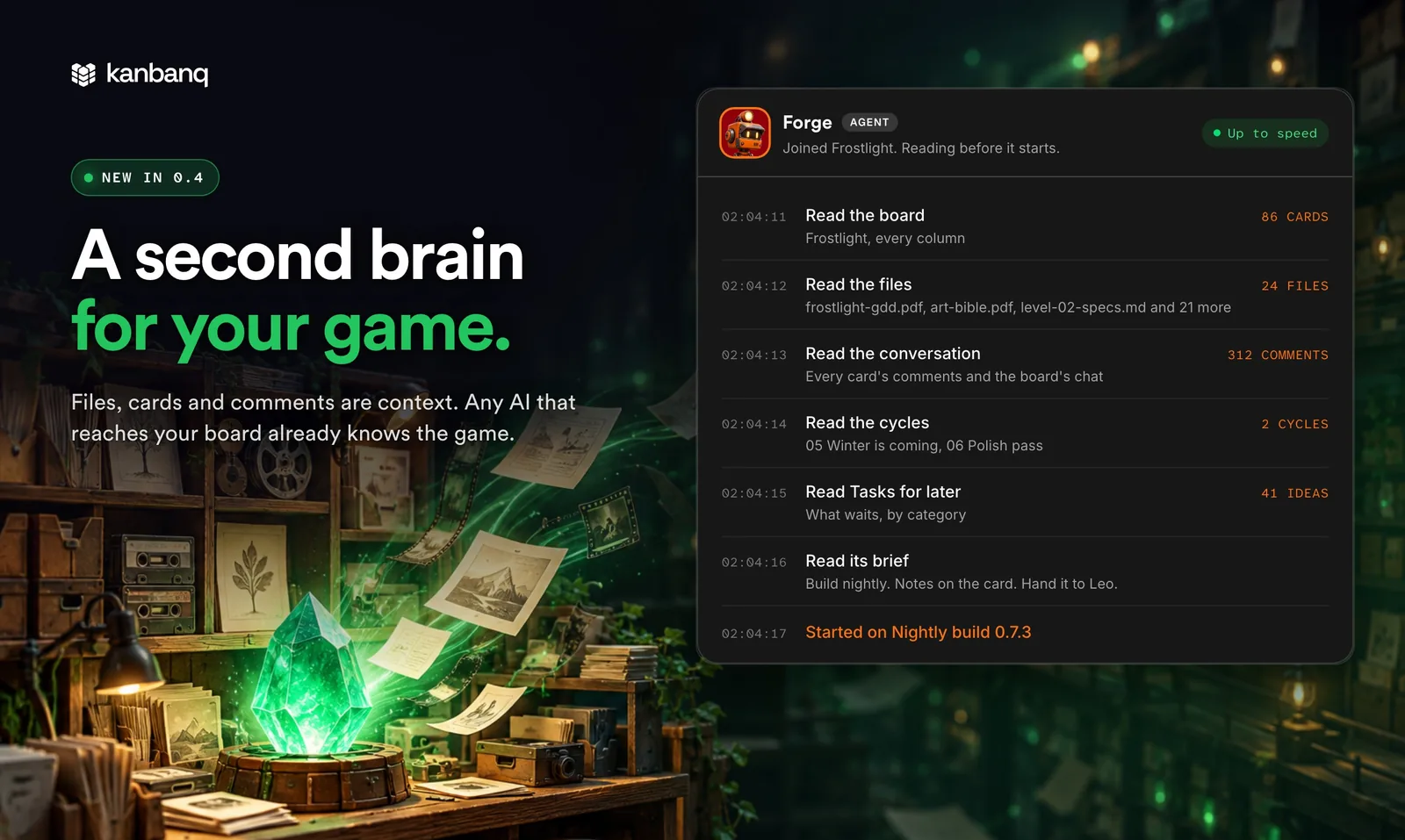
A second brain for your game
An agent starts with the project's context: the board, the cards and their checklists, the comments, the files, the cycles, Tasks for later and the brief your team writes for agents. It knows what the team is working on from its first minute.
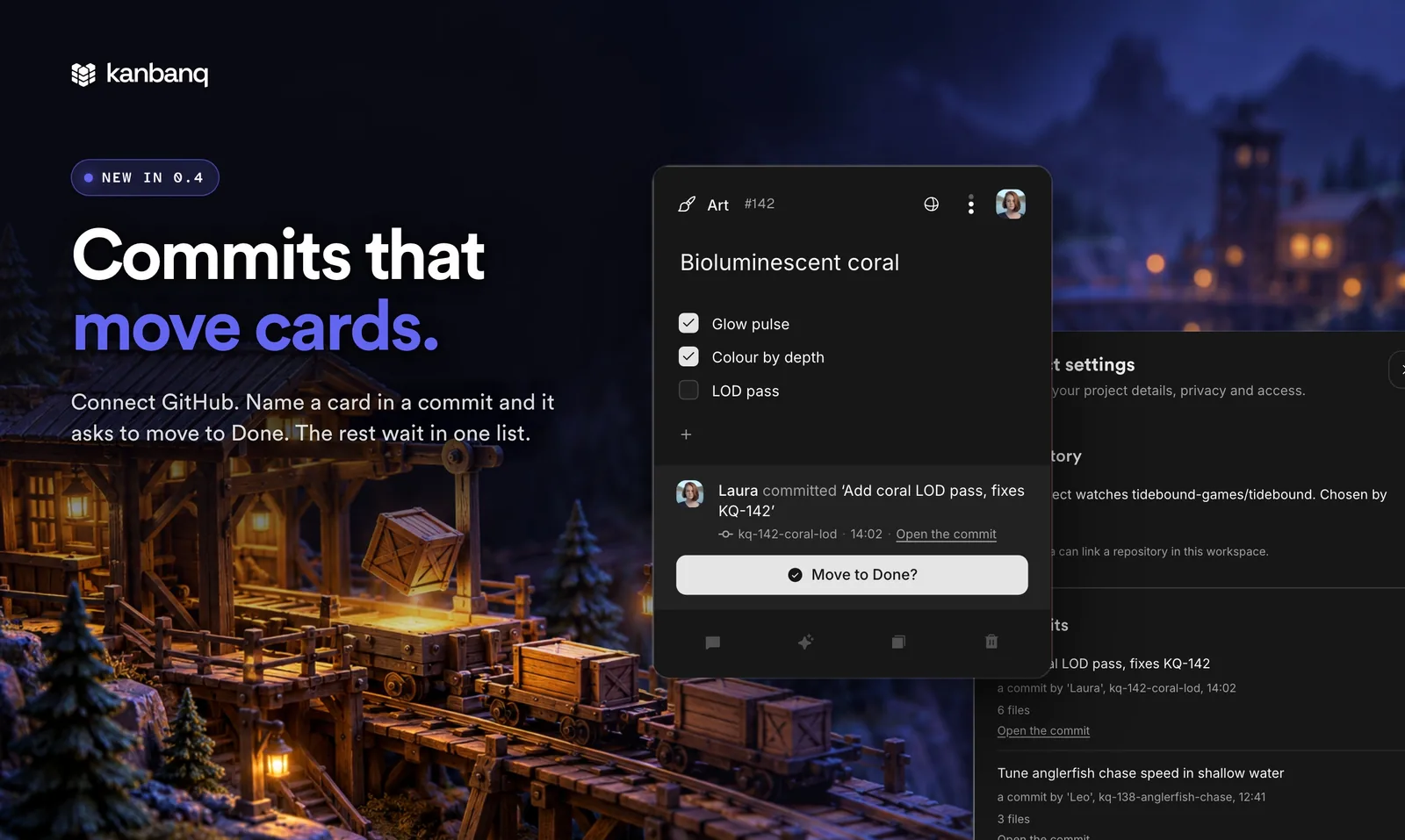
Commits that move cards
Connect a GitHub repository to a project. A commit that names a card shows up on that card and asks whether to move it to Done; the rest wait in one list. Repositories are on every paid plan.
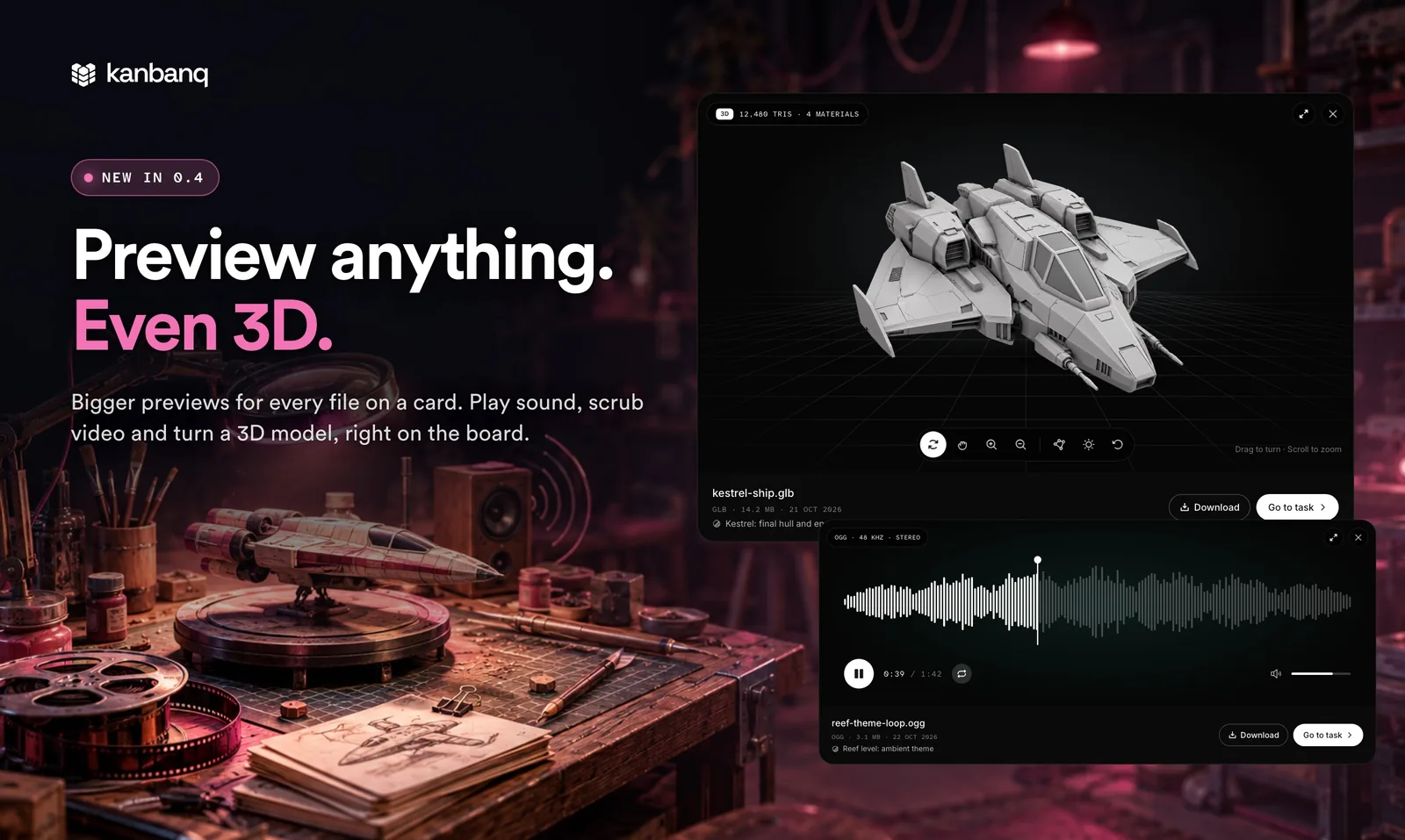
Preview anything. Even 3D.
Every file on a card opens in a bigger preview. Play a sound, scrub a video, read Markdown, code or a table, and turn a 3D model, right on the board.
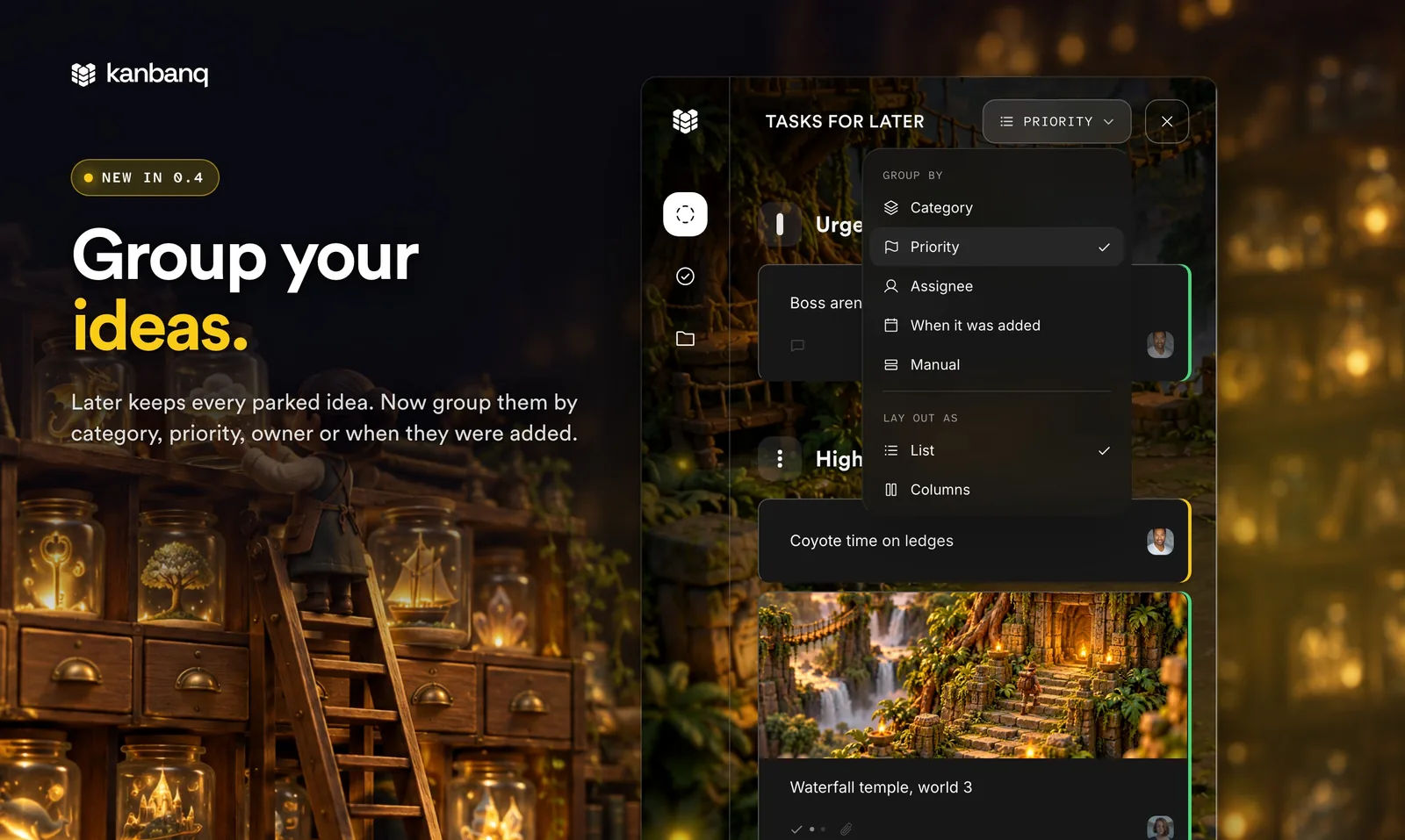
Group your ideas
Tasks for later keeps every parked idea off the board. Now group it by category, priority, person or when it was added, as a list or as columns.
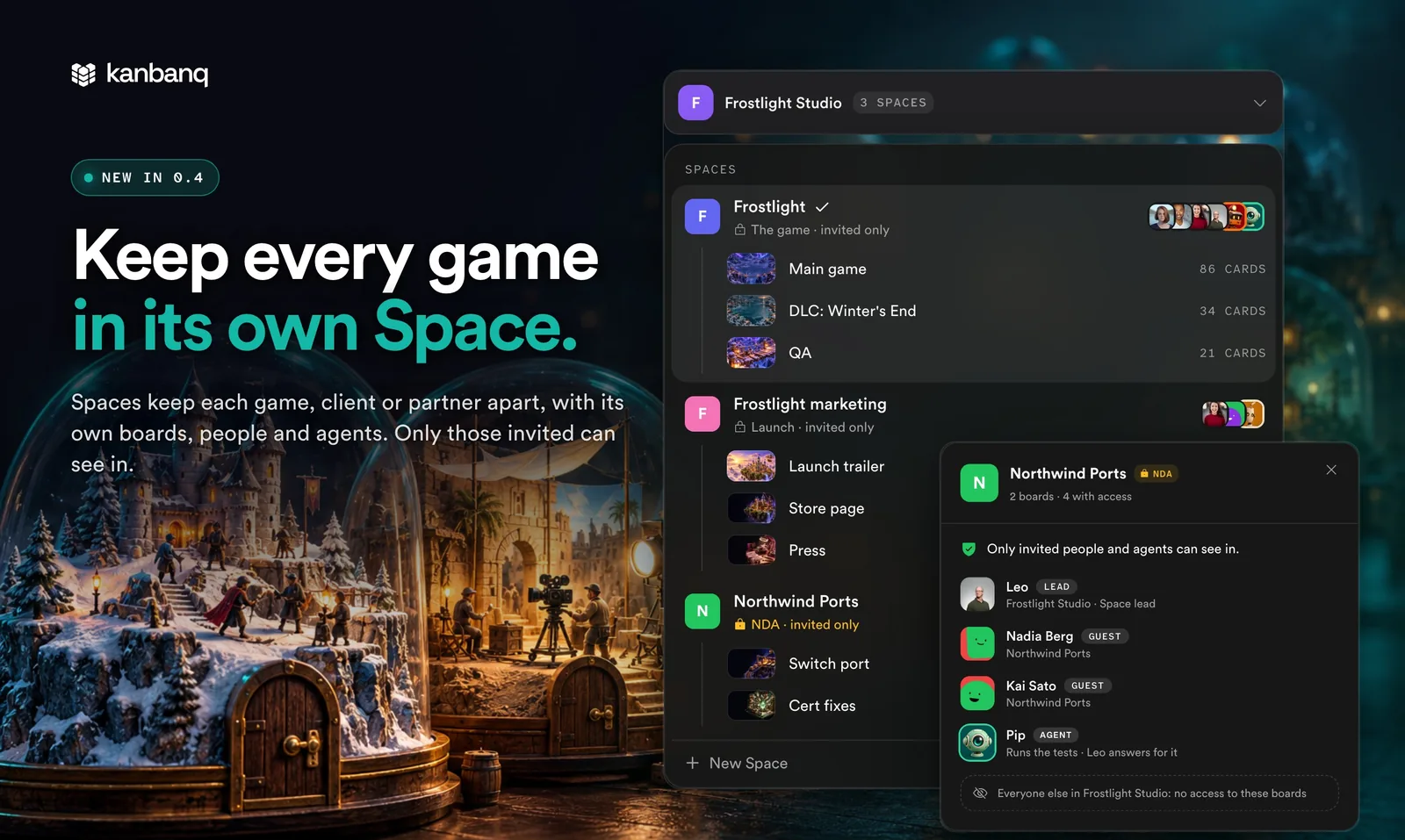
Keep every game in its own Space
Spaces keep each game, client or partner apart inside one studio, each with its own boards, people, agents and rules. Only those invited to a Space can see it. Team has three, and Studio as many as it needs.
One price for the whole team
No plan counts seats, and one person can pay for the whole team.
€0
Free: any number of people, up to 3 boards and 250 active tasks
€9
a month for Pro: up to 10 people, agents and GitHub
€49
a month for Team: up to 30 people and 3 Spaces
€200
a month for Studio: any number of people and Spaces
Every paid plan can add as many agents as it likes. Paid yearly, Pro is €90, Team €490 and Studio €2,000. Every plan is on the pricing page.
Built for game dev
Kanbanq 0.4 is out. Start a board, free, and bring the whole team.